Carbon Anode Block
Home » Carbon Products » Carbon Anode Block

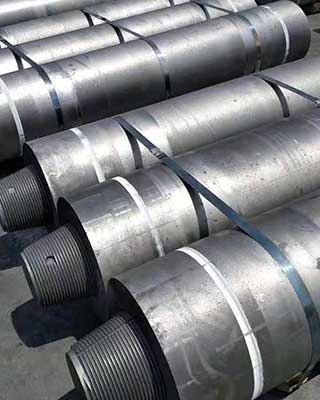
Carbon Anode Block refers to blocks produced using petroleum coke or pitch coke as aggregates and coal tar pitch as a binder, used as anode materials in prebaked aluminum electrolytic cells. Therefore, they are also known as prebaked anode carbon blocks, commonly referred to as carbon anodes for aluminum electrolysis. These blocks have undergone baking and have stable geometric shapes, generally rectangular, with 2-4 circular grooves on the conducting direction surface, each with a diameter of 160-180mm and a depth of 80-110mm.
Uses of Carbon Anode Block
Anodes are large carbon blocks used for conducting during the aluminum reduction process and serve as anode materials for prebaked aluminum electrolytic cells. Anode carbon blocks participate in electrochemical reactions to guide current into the electrolytic cell.
As a leading graphite electrode supplier, AGRM has nearly 20 years of experience in customizing graphite products, ensuring product dimensions within drawing tolerances. Please contact our engineers for more personalized solutions if you have any requirements.
- Each anode carbon block assembly consists of 1 to 3 blocks, an anode rod, and steel claws pre-installed.
- Single-block anode assemblies are the most common.
- The number and size of block assemblies depend on the cell capacity and current density (generally 10 to 40 assemblies).
- Carbon blocks are symmetrically arranged on both sides of the horizontal busbar inside the cell, with aluminum rods fixed to the horizontal busbar via rotatable fixtures, serving the dual purpose of current transmission and block suspension.
Highlights of AGRM Carbon Anode Block
High-quality Raw Materials
AGRM’s carbon anodes are made from calcined petroleum coke, recycled carbon materials, and coal tar pitch. The properties of pitch and coke significantly influence anode quality. During electrolysis, coal tar pitch as part of the anode carbon blocks undergoes thermal decomposition and chemical reactions in a high-temperature and electrolytic environment, generating gases. Different types of coal tar pitch, due to differences in chemical composition, softening point, and coking value, result in varying gas release during electrolysis. Gas release from coal tar pitch not only affects the cell atmosphere and electrolysis efficiency but also impacts the environment.
Therefore, selecting appropriate types of coal tar pitch and controlling the baking process are crucial for reducing gas emissions and improving anode carbon block performance.
AGRM selects coal tar pitch with low gas release and good thermal stability, continuously improves raw material ratios, and reduces gas generation through optimized baking processes.
Antioxidant Coating
The consumption of carbon anodes is a major cost in aluminum electrolysis production, accounting for approximately 15% of total costs. During aluminum electrolysis, the surface of carbon anode blocks undergoes oxidation reactions due to the high temperature and pressure of the electrolyte, resulting in carbonaceous residues on the surface and within, affecting lifespan.
To address this issue, AGRM applies a high-temperature antioxidant coating.
- This coating fills microcracks and pores on the matrix surface, reducing the contact area between oxidative gases and the carbon matrix.
- This lowers the oxidation activity points on the carbon anode surface, seals the matrix pores, suppresses carbon oxidation, enhances the wettability between the coating material and carbon matrix at high temperatures, and improves bonding strength.
Energy-saving and Environmental Protection
AGRM has improved the structural design of anode carbon blocks to make our products more energy-efficient and environmentally friendly.
- The groove design at the bottom of the anode allows gases such as carbon dioxide and carbon monoxide to quickly escape through the grooves, reducing bubble formation opportunities, increasing the contact area between the anode and electrolyte surface, lowering internal resistance in the cell, and improving current efficiency.
- It reduces thermal stress on the anode, allows high-temperature electrolytes to enter the grooves directly, ensures even heating of the anode, prevents temperature unevenness, reduces internal thermal deformation stress, and prevents anode cracking.
- It increases the heating rate of the anode, allowing newly replaced anodes to participate in electrolytic reactions promptly, reducing energy consumption, lowering anode current deviation, ensuring cell stability, reducing anode sensitivity, and achieving energy savings and emissions reduction.
Doping Modification
During the preparation of anode carbon blocks, AGRM adds elements or compounds with antioxidant properties such as Si, B, and Mg to the raw materials.
- Enhance the structure and performance of carbon anodes to improve their antioxidant properties.
- Reduce consumption and unevenness.
- Improve the stability and efficiency of aluminum electrolysis.
Carbon Anode Block Technical Specifications
| No | Item | Unit | Guarantee Value |
| 1 | Apparent Density | g/cm3 (min) | 1.52 |
| 2 | Electrical Resistivity | μΩ.m (max) | 63 |
| 3 | Compress strength | Mpa (min) | 38 |
| 4 | Thermal Conductivity | W/mk(max) | 4.5 |
| 5 | Flexural Strength | Mpa(Min) | 9 |
| 6 | Permeability | NPm(Max) | 2 |
| 7 | Thermal Exposure | 10-6/k | 5 |
| 8 | Ash | %(Max) | 0.5 |
| 9 | Fe | ppm(Max) | 500 |
| 10 | Si | ppm(Max) | 350 |
| 11 | V | ppm(Max) | 350 |
| 12 | Na | ppm(Max) | 500 |
Carbon Anode Block Prices
Electrolytic cells are classified into self-baking and prebaked types, corresponding to anode paste and anode carbon blocks, respectively. Due to the additional baking process required, the latter type commands a higher price.
The market price of prebaked anode carbon blocks is determined by market supply and demand, raw material prices, industry production capacity, and other factors. Prices rise with high market demand and fall when demand decreases.
In recent years, China’s aluminum production capacity has continued to grow, and there are many aluminum-producing countries in the international market, intensifying competition within the industry. However, due to the crucial role of anode carbon blocks in aluminum electrolysis, market demand has remained relatively stable.
According to market fluctuations, the selling price of anode carbon blocks ranges approximately from $300 to $700 per metric ton.
Key Stage in Prebaked Carbon Anode Block Production Process
Purpose of Baking
- Improving Mechanical Strength
Baking raw anode carbon blocks at high temperatures improves the graphite crystal structure, enhances mechanical strength, and helps the blocks withstand the weight of alumina in the electrolytic cell while maintaining shape stability.
- Enhancing Chemical Stability
Anode carbon blocks are eroded by alumina during aluminum electrolysis, necessitating some level of oxidation resistance and chemical stability. High-temperature baking forms a graphite layer on the block surface, enhancing chemical stability and reducing interaction with alumina.
- Improving Electrical Conductivity
High-temperature baking enhances the electrical conductivity of anode carbon blocks, lowers resistance, and facilitates smooth aluminum electrolysis. Baking is a critical step in producing prebaked anode carbon blocks.
Process Flow
- Drying of Blocks
Raw anode carbon blocks are dried in ovens or drying cars to evaporate moisture, preventing steam explosions during baking.
- Heating and Temperature Rise
Dried blocks are placed in baking furnaces, heated to around 1000°C, held for a period to allow tar to volatilize, and temperature is gradually increased up to 1400°C.
- High-Temperature Roasting
Blocks are kept at high temperatures for a period, allowing residual porosity in the blocks to be carbonized and new small pores to form. This process is closely related to reaction mechanisms and is challenging to control.
- Cooling Treatment
Blocks are removed from the furnace and cooled in cooling pits to gradually reduce temperature and prevent surface cracking.
Key Parameters
- Furnace Temperature
Furnace temperature gradually increases during baking, reaching around 1400°C, with precise control of central and surface block temperatures.
- Baking Time
Baking time typically ranges from 10 to 20 hours; too short a time affects baking quality, while too long increases porosity excessively, reducing mechanical strength and stability.
- Cooling Rate
Baked blocks must cool slowly to avoid surface cracking, determined by block size, furnace specifications, and temperature adjustment factors in the process.