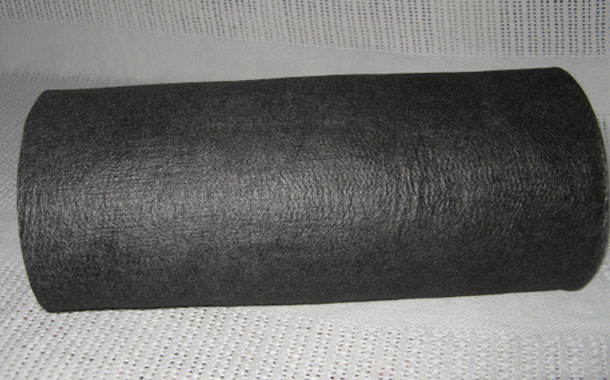
Carbon Fiber Felt
Home » Carbon Products » Carbon Fiber Felt

Product Name: carbon felt, carbon fiber felt.
Type: polyacrylonitrile (pan) based carbon felt, viscose-based (rayon) carbon felt, etc.
Carbon Content: ≥97.5%.
Thickness (mm): 3/5/6/8/10/12.7.
Operating Temperature: 1200℃.
Carbon fiber felt, or carbon felt, is a felt-like material made from carbon fibers. After high-temperature graphitization, it can be transformed into graphite felt. Carbon fiber felt has broad-spectrum adsorption, large capacity, good adsorption of inorganic gases, non-melting and non-dripping when exposed to fire, smokeless and non-toxic, and it maintains it’s flame retardant properties even after multiple washes. It can be used as an adsorptive purification material and as thermal insulation for vacuum furnaces and inert gas furnaces. Currently, carbon felt is mainly divided into PAN-based carbon felt, viscose-based (rayon) carbon felt, and asphalt-based carbon felt, with PAN-based carbon felt being the most widely used.
Types of Carbon Fiber Felt
AGRM is a supplier of carbon products, known for stable and reliable quality. Our products include: graphite felt, carbon felt, graphite electrodes, graphite blocks, etc.
Our high-quality carbon felt (carbon fiber felt) is an exceptional material with excellent conductivity and porosity, making it an ideal choice for various applications. It offers outstanding high-temperature resistance and is suitable for use in air, vacuum, and inert gas environments. Its unique properties, including low thermal conductivity, high porosity, and excellent resistance, make it an essential material in industries such as photovoltaics, semiconductors, metallurgy, fiber optics, glass processing, and ceramics. Whether you need thermal insulation, filtration, or any other application requiring these superior properties, our carbon felt will meet your needs.
PAN Carbon Felt
- What is PAN Carbon Felt?
PAN carbon felt, also known as polyacrylonitrile, is specially designed and used for high-temperature insulation in vacuum furnaces and inert gas furnaces, among other applications. Compared to rayon, PAN carbon felt has thicker fibers, a larger fiber diameter, a smaller surface area, and better oxidation resistance.
Rayon Carbon Felt
- What is Rayon Carbon Felt?
Rayon carbon felt is a high-quality material designed for high-temperature insulation in vacuum furnaces and inert gas furnaces. Compared to our PAN felt, rayon felt has a higher carbon content and lower ash content.
- Choosing PAN Felt or Rayon Felt?
Rayon has a lower thermal conductivity than PAN. For heat treatment applications, we recommend using PAN carbon felt as this material is easier to process and more cost-effective. If you operate at higher temperatures, rayon is the better choice.
Specifications
| Model | Heat Treatment Temperature | Carbon Content | Density (g/cc) | Ash (ppm) | Available Thickness (mm) |
| Pan-Based | 1200 °C | ≥ 97.5% | 0.14–0.16 | ≤ 800 | 3/5/6/8/10/12.7 |
| Rayon-Based | 1200 °C | ≥ 99.5% | 0.12–0.14 | ≤ 300 |
Graphite Felt Characteristics
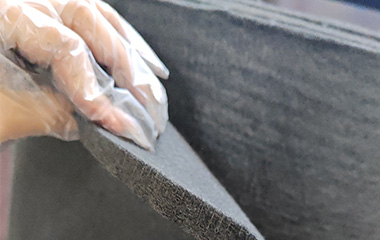
- Physical Properties
- Low density, lightweight, easy to install and cut.
- Attractive and enhances the surface strength of composite materials.
- Functional Properties
- Exceptional flame retardancy and protective capabilities.
- Strong adsorption capacity, effectively adsorbing inorganic gases.
- Chemical Properties
- Low sulfur and ash content, no emissions, environmentally friendly.
- Stable electrochemical performance, significantly improving charge and discharge density.
- Thermal Properties
- Excellent thermal insulation, low thermal conductivity, low thermal capacity.
- Extremely high thermal resistance, up to 800 times, with high temperature and thermal shock resistance.
- Ease of Operation
- Easy to install and cut, convenient to use.
If you need customized sizes or larger quantities, please feel free to contact us directly for a personalized quote.
Difference Between Carbon Felt and Graphite Felt
Carbon felt is an economical alternative to graphite felt. Both are made from precursor fibers processed through weaving, needle punching, low-temperature carbonization, and high-temperature carbonization, with the initial steps being similar. The main difference is that graphite felt undergoes high-temperature carbonization, making it more heat-resistant, with an operating temperature up to about 2800°C. Graphite felt has a higher carbon content, exceeding 99%.
Physical Properties: Graphite felt has better thermal conductivity and electrical conductivity, suitable for applications in thermal and electrical barriers. Carbon felt has higher strength, rigidity, and heat resistance, capable of withstanding high-temperature and high-pressure environments.
Chemical Properties: Graphite felt is less stable against acids, bases, and other chemicals and is more susceptible to corrosion. In contrast, carbon felt has better corrosion resistance and chemical stability, making it suitable for use in acidic, basic, and other corrosive environments.
Choosing between carbon felt and graphite felt depends on the actual production requirements. AGRM is a professional graphite felt supplier from China. We can help you find the best solution. Feel free to contact us!
Why AGRM?
- Stable Performance
- Durable and Effective
- Easy Installation
- Smooth Operation
- Wide Application
- Fast Delivery
As a leading graphite electrode supplier, AGRM has nearly 20 years of experience customizing graphite products. Our products are offered at factory prices. If you have any requirements, please contact us as soon as possible!
Applications
- Solvent Recovery
This can be used in industries such as chemicals, pharmaceuticals, spray painting, chemical fibers, and rubber for the adsorption and recovery of (gas/liquid) solvents.
- Air Purification
Can absorb and filter air polluted by organic solvents and smoke from daily life (such as SO₂, NO₂, O₃, NH₃, etc.).
- Water Purification
Can remove heavy metal ions, carcinogens, odors, residual chlorine, bacteria, discoloration, etc., from water.
- Protective Equipment
Can be used to manufacture gas masks, face masks, chemical protective gear, smoke filter plugs, etc.
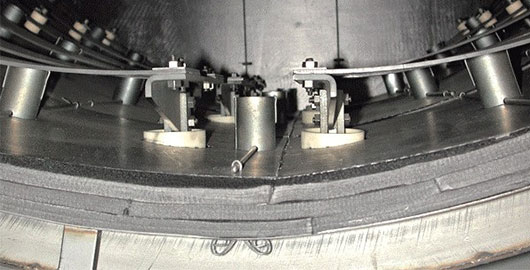
- Furnace Insulation Materials and Components
- Thermal shields and radiators
- Backing strips for welding and soldering
- Cathodes in flow battery applications
- Reaction surfaces in other electrochemical processes
- Glass blowing pads and plumber’s pads
- Lamp filaments in ultra-light furnaces
- Automotive exhaust pipe liners
Production Process of Carbon Fiber Felt
- Impregnation and Drying
The raw material viscose fiber fabric is inspected and, after passing the inspection, enters the impregnation tank, where it is immersed in a 1% diammonium phosphate aqueous solution. After 1 hour, it is removed and passed through continuous extrusion equipment. The extruded phosphoric acid diammonium solution returns to the impregnation tank and is naturally dried under natural light or using a hairdryer.
- Carbonization Treatment
The dried viscose fiber fabric is placed in a carbonization furnace, and heated to 300℃. The heating process begins slowly, then quickly. Nitrogen gas is introduced into the furnace through pipes at the furnace base to protect the carbonization gases. Carbonization removes volatile non-carbon components from the fiber, increases the carbon content and purity of the product, and forms a carbonized fiber with a quasi-graphite microcrystalline structure.
- Activation Treatment
The carbonized viscose fiber fabric is heated to about 1400℃ (furnace temperature) for activation. During activation, steam is introduced, and the fabric is perforated with high-temperature-resistant pipes to increase its specific surface area, thus obtaining finished carbon fiber felt. The activation process involves adding catalysts (such as nitrogen gas) to increase the number of activated molecules, making the carbon molecules and atoms more active with greater energy.
- Cutting and Rolling
After naturally cooling, the perforated carbon fiber felt is cut into the required sizes using cutting machines and rolled into rolls for temporary storage before sale.