

Graphite Petroleum Coke
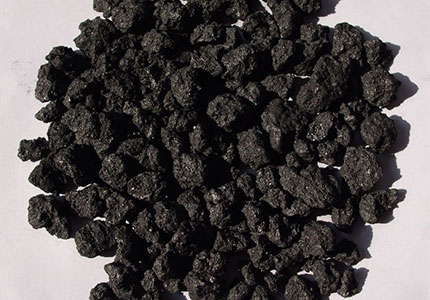
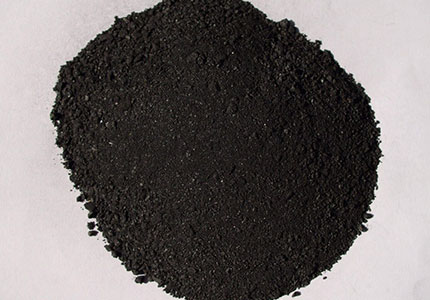
Form: granules
Appearance: irregular shapes in dark gray or black, porous structure, with a metallic luster.
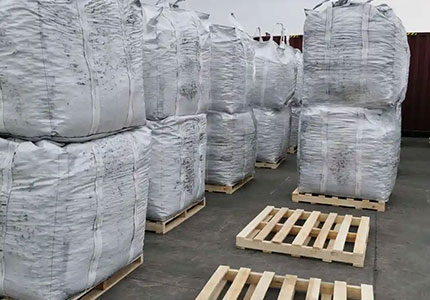
Packaging Options: packed in small or bulk bags, based on customer preference.
Size: 0-5mm, 0.5-1mm, 0.5-2mm, 1-5mm, 3-8mm, 1-10mm, 90% min, or as customized by the customer.
- Stable quality, high carbon content, low sulfur, and fast delivery.
- High absorbency, leaves no residue, saving production costs.
What is Graphitized Petroleum Coke? Petroleum coke, a by-product of petroleum, is generated during the refining process. When crude oil is distilled to separate light oil and heavy oil, the heavy oil undergoes thermal cracking, transforming it into petroleum coke.
Graphitized Petroleum Coke (GPC) is made by placing petroleum coke into a graphitization furnace, where it undergoes high-temperature treatment at approximately 3000°C. This process converts the amorphous carbon crystal structure of petroleum coke into a hexagonal layered crystal structure, a transformation known as graphitization. The resulting product is called graphitized petroleum coke, commonly referred to as “graphitized coke.” Graphitization reduces impurities in the carbon raiser, increases carbon content, and lowers sulfur levels. GPC features high fixed carbon content, low sulfur, low ash, and low porosity, making it an essential component in various applications. Currently, most mainstream carbon additives in the market are made from graphitized petroleum coke.
- Uses of Graphitized Petroleum Coke
- Recognized as the best carbon additive in the metallurgical industry.
- The optimal casting reduction inoculant in the foundry industry.
- An acknowledged high-quality refractory material.
- The best-reducing agent in the chemical industry.
- Are Graphite and Graphitized Petroleum Coke the Same?
Graphitized petroleum coke is not graphite. Although both are carbon-based materials, they differ significantly in terms of origin, structure, properties, and applications.
Graphite is a natural mineral with carbon atoms arranged in a hexagonal lattice to form a layered structure. It exhibits high heat resistance, excellent electrical conductivity, and superior thermal stability. Graphite is widely used in batteries, electrodes, lubricants, sealing materials, and other fields.
Graphitized petroleum coke is a material obtained by subjecting petroleum coke to high-temperature graphitization. During this process, carbon atoms rearrange to form a more orderly crystalline structure. This gives graphitized petroleum coke properties such as high electrical conductivity, thermal conductivity, and excellent high-temperature stability. It is primarily used as electrode material, heat dissipation material, and structural material in high-temperature environments such as furnaces, electric furnaces, and electrolytic cells.
Highlights of AGRM Graphitized Petroleum Coke
AGRM’s graphitized petroleum coke is a premium carbon material product. Through advanced production processes and strict quality control, we deliver high-performance GPC products to meet the needs of various industries.
High Carbon: High purity ranging from 98.5% to 99.5%.
Low Sulfur: Its low, stable sulfur levels reduce sulfur’s adverse effects during spheroidization and inoculation in alloys, saving costs.
Low Nitrogen: Nitrogen content between 50PPM and 300PPM (0.005%-0.03%).
High Electrical Conductivity: A highly ordered graphite structure provides efficient conductivity.
Low Thermal Expansion: GPC exhibits minimal thermal expansion, ensuring dimensional stability in high-temperature applications.
High Carbon Recovery Rate: 92%-98%.
Fast Absorption Rate: Easily dissolves in molten iron.
Large Graphite Crystals and High Graphitization: Reduces the tendency of iron shrinkage and enhances the mechanical properties of castings.
Stable Carbon Addition, Good Absorption, and Significant Heating Effect: No slag return, effectively protecting and extending furnace life while reducing furnace lining consumption.
Specifications
| Product Name | Moisture | Ash | V.M | C | S |
| Graphite Petroleum Coke (GPC) | 1max | 0.3max | 0.5max | 98.5%min | 0.05max |
Why AGRM?
- Stable Performance
- Durable and Effective
- Easy Installation
- Smooth Operation
- Wide Application
- Fast Delivery
As a leading graphite electrode supplier, AGRM has nearly 20 years of experience customizing graphite products. Our products are offered at factory prices. If you have any requirements, please contact us as soon as possible!
Applications
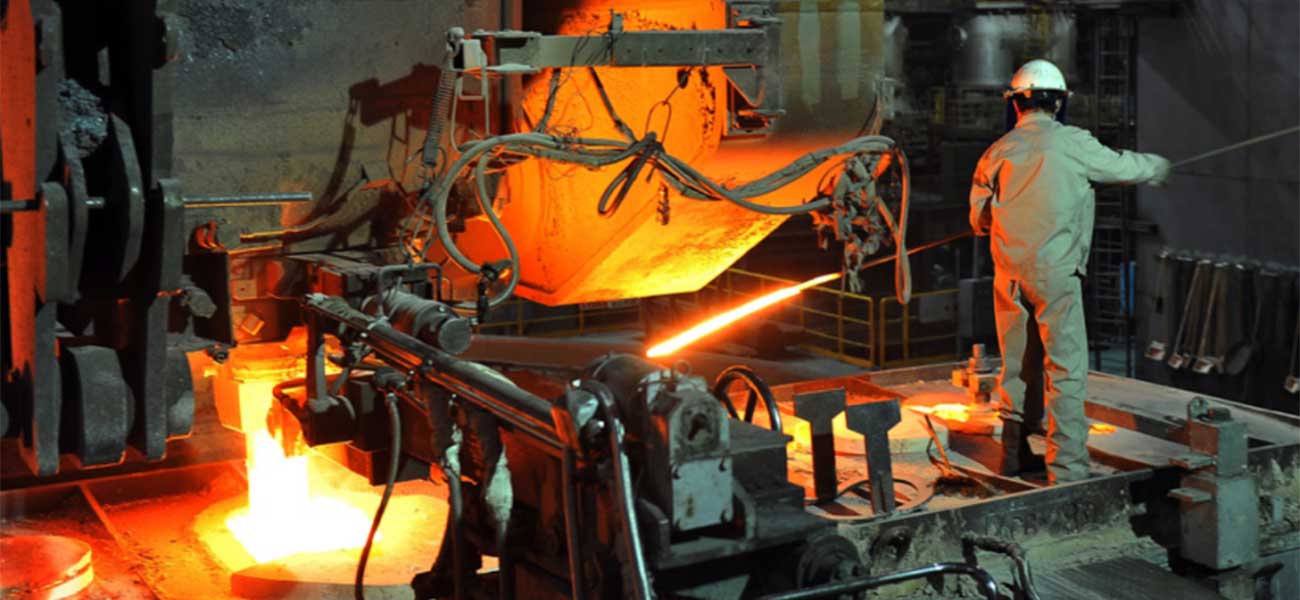
Metallurgy, Foundry, and Precision Casting
Graphitized petroleum coke is widely used as a carbon additive to enhance furnace temperature, improve metallurgical yield, and optimize the metallurgical environment, thereby refining the metallographic structure of castings.
Chemical and Other Industrial Applications
In the chemical industry, graphitized petroleum coke is used as a reducing agent, casting reduction inoculant, and refractory material. Additionally, it is utilized in producing high-temperature crucibles for smelting, lubricants for mechanical industries, electrodes, and pencil leads, carbon brushes for electrical applications, electrodes for battery production, and catalysts in the fertilizer industry.
Steel Casting
- Carbon additive
- Graphite electrodes
- Refractory materials
Industrial Applications
- Brake pads
- Sealing rings
- Lubricants
Battery Production
- Cathodes for alkaline
- Ithium-ion batteries
- Other uses
Metallurgy
- Graphite crucibles
- Anodes for aluminum smelting.
Others
- Glass sheets
- Clay bricks
- Conductive coatings.
Graphitized Petroleum Coke (GPC) vs. Calcined Petroleum Coke (CPC)
- Smelting Environment
- GPC is produced in a graphitization furnace at around 3000°C.
- CPC is heated in a calcining kiln at temperatures exceeding 1500°C.
- Fixed Carbon Content
- Graphitized carbon additives have a fixed carbon content of approximately 98%, with a maximum of up to 99%.
- Calcined petroleum coke typically has a fixed carbon content of around 98.5%.
- Sulfur Content
- GPC has a sulfur content generally between 0.03%-0.06%, with levels above 0.05%. Its absorption rate is typically 90%-95%.
- CPC has a sulfur content of approximately 0.5%, with an absorption rate of 80%-90%.
- Appearance
- CPC: Irregularly shaped, black block-like granules with strong metallic luster and porous carbon particles.
- GPC: In addition to CPC’s characteristics, GPC appears darker, shinier, and has a stronger metallic luster. It can leave smooth marks when drawn on paper.
- Raw Material
Both use raw petroleum coke as the starting material.
- Smelting Time
GPC requires a longer smelting time compared to CPC.
- Electrical Conductivity
GPC undergoes high-temperature processing that enhances the graphite-like arrangement of carbon atoms, resulting in significantly better electrical conductivity compared to CPC.
- Production Process
GPC is the result of further high-temperature graphitization treatment of CPC.
- Applications
Although both graphitized petroleum coke (GPC) and calcined petroleum coke (CPC) are primarily used in steel smelting and casting manufacturing, GPC, due to its unique properties, is more suitable for gray iron casting and ductile iron casting with strict sulfur requirements.
CPC(left) is a hard, porous material with good electrical conductivity, commonly used as a carbon additive or anode material in aluminum smelting, steelmaking, and foundries. GPC(right), through the graphitization process, is transformed into a crystalline graphite structure with ultra-high carbon content (>99%) and excellent electrical and thermal conductivity. GPC is softer and has fewer pores, making it ideal for high-tech applications such as lithium-ion battery anodes, electric arc furnace electrodes, and synthetic graphite production. While CPC supports heavy industries, GPC caters to advanced, precision-demanding technologies.
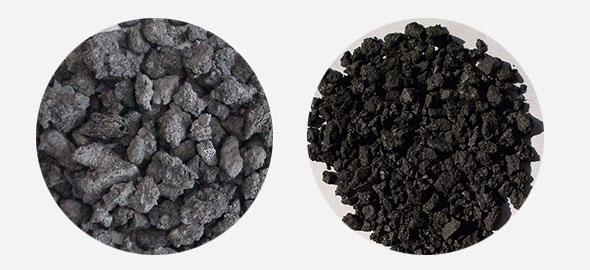
Although the price of graphitized carbon additives is higher than that of calcined petroleum coke, from a comprehensive usage cost perspective, using graphitized carbon additives is the most economical option. AGRM recommends the use of graphitized carbon additives to optimize production efficiency in foundries and steel mills.
Production Process of Graphitized Petroleum Coke
- Selection of Petroleum Coke
AGRM carefully selects high-grade petroleum coke as the starting material to ensure optimal graphitization performance.
- Heat Treatment
The selected petroleum coke undergoes controlled heating in an inert gas furnace. This step initiates the graphitization process and facilitates the alignment of carbon atoms.
- Graphitization
The heat-treated coke is further processed in a temperature-controlled graphitization furnace, typically exceeding 2,500°C (4,532°F). During this stage, carbon atoms rearrange into a highly ordered graphite structure, enhancing electrical and thermal conductivity.
- Sorting and Crushing
After cooling, the material is fed into a roller crusher for sorting and crushing. The particle sizes are adjusted sequentially to 0–1 mm, 1–3 mm, 3–5 mm, 5–8 mm, 8–10 mm, 10–25 mm, etc., and then packaged according to customer requirements.
- Quality Control
AGRM employs rigorous quality control measures throughout the production process to ensure the consistent performance of its GPC products.
Graphitized Petroleum Coke Feeding Method
For electric furnace smelting, carbon additives should be added together with scrap steel and other charge materials. Small amounts can be added to the surface of molten iron. However, bulk feeding directly into molten iron should be avoided to prevent excessive oxidation, which can result in insufficient carbon content in the casting and reduced decarburization effects.
The amount of carbon additive used is determined based on the composition and carbon content of other raw materials. The additives are composed of pure graphitized carbon substances, reducing impurities in pig iron. Proper selection of carbon additives can effectively lower production costs for castings.