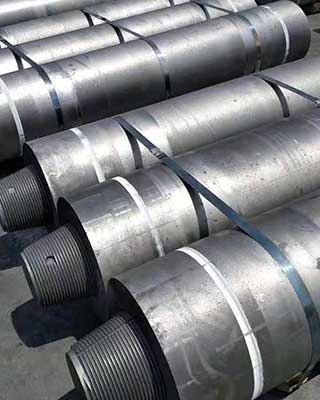
Cathode Block
Home » Carbon Products » Cathode Block

Product Name: Carbon Cathode Block
Other Names: Graphite Cathode / Graphite Cathodes Block / Graphitized Cathode / Cathode Block
Classification: Carbon Cathode Block, Semi-Graphitized Cathode Block, and Graphite Cathode Block.
Size: Customized according to customer requirements.
Regular Packaging: Wooden Crate / Customized.
The cathode block is a key material in the production of primary aluminum. It is made from high-quality anthracite, metallurgical coke, graphite, and coal pitch as a binder. The manufacturing process involves raw material preparation, formulation, mixing, forming, roasting, and machining, resulting in high-temperature resistance, resistance to molten salt corrosion, and good conductivity. High-quality cathode blocks help improve the efficiency of aluminum smelting. There are three types of cathode blocks: Carbon Cathode Block, Semi-Graphitized Cathode Block, and Graphite Cathode Block. Full graphitization of the entire cathode block produces excellent quality stability, thermal conductivity, electrical conductivity, thermal shock resistance, and bath resistivity.
AGRM is a professional supplier of a full range of carbon products, and we can customize processing to meet specific customer requirements for product shape and size. We welcome inquiries with attached drawings!
Classification of Cathode Blocks
As a leading graphite electrode supplier, AGRM has nearly 20 years of experience in customizing graphite products, ensuring product dimensions within drawing tolerances. Please get in touch with our engineers for more personalized solutions if you have any requirements.
Carbon Cathode Block
Ordinary cathode carbon blocks are primarily made from anthracite roasted at 1250–1350°C, containing a certain amount of binder. They are typically manufactured using compression and roasting processes at lower temperatures, requiring no additional graphitization treatment. The resistivity is generally between 50–60 μΩ·m, mainly used in aluminum electrolysis and metallurgy industries.
Semi-Graphitized Cathode Block
Semi-graphitized carbon blocks can be divided into two types based on production processes:
- Semi-Graphitized Carbon Block
Made with high-quality, high-temperature roasted anthracite or a large proportion of graphite fragments, the formed green body is only roasted (at a temperature not exceeding 1200°C) and does not enter the graphitization furnace for heat treatment.
- Semi-Graphitized Carbon Block
Made with a larger amount of easily graphitizable coke as aggregate, the green body is roasted before entering the graphitization furnace for heat treatment at temperatures between 1800–2000°C.
The former exhibits higher strength and hardness, while the latter has better electrical conductivity and overall integrity.
Graphite Cathode Block
- It is made from easily graphitizable coke, with a graphitization treatment temperature of 2500–2800°C.
- The difference between semi-graphitized carbon blocks and graphite blocks lies in the degree of ordered arrangement of the product's lattice, indicating varying degrees of graphitization. The resistivity can represent the level of graphitization: graphite carbon blocks have a lattice that is nearly completely ordered, with resistivity below 15 μΩ·m, while semi-graphitized carbon blocks have resistivity ranging from 15–45 μΩ·m.
Specifications
| PROPERTIES | UNIT | amorphous carbon | semi-graphite | semi-graphitized | graphitization |
| Real density | g/cm3 | 1.85~1.95 | 2.05~2.15 | 2.05~2.18 | 2.2 |
| Apparent density | g/cm3 | 1.50~1.55 | 1.60~1.70 | 1.55~1.65 | 1.6~1.8 |
| Total porosity | % | 18~25 | 20~25 | 15~30 | 25 |
| Open porosity | % | 15~18 | 15~20 | 15~20 | 20~24 |
| Electrical Resistance | μΩ·m | 30~50 | 15~30 | 12~18 | 8~14 |
| Thermal conductivety | W/mk | 8~15 | 30~45 | 32 | 80~120 |
| Compressive strength | MPa | 25~30 | 25~30 | 20~25 | 15 |
| Bending strength | GPa | 6~10 | 10~15 | 6~10 | 10~15 |
| Rapport test | % | 0.6~1.5 | 0.3~0.5 | 0.3~0.5 | 0.05~0.15 |
| Ash content | % | 3~10 | 0.1~1.0 | <1.5 | <0.5 |
Characteristics of AGRM Cathode Blocks
- Low Resistance and Good Conductivity
Therefore, it has a smaller voltage drop, which can reduce energy consumption in the electrolytic production process.
- Certain Mechanical Strength
During the aluminum electrolysis process, the volume of the cathode block expands, generating significant expansion stress and high mechanical strength, thereby reducing the damage rate.
- Low Porosity
When the electrolyte content increases, the cathode block does not quickly get damaged.
- Low Ash Content
This does not increase resistivity or affect conductivity.
- Small Damage Coefficient
Which can extend its service life.
Application
Cathode blocks are essential anode materials in the aluminum electrolysis process. In aluminum electrolysis, the current passes through the electrolyte solution between the anode and cathode, facilitating the reduction of metallic aluminum. The cathode block acts as the receiving end of the current and the medium for the catalytic reduction reaction, playing a crucial role in aluminum electrolysis cells, thus enhancing the efficiency of aluminum smelting. With the rapid increase in global demand for aluminum, cathode blocks play a vital role in the industry.

Cathode carbon blocks are used not only as lining materials for aluminum electrolysis cells but also as cathodes when the electrolysis cell is energized, providing dual functions as refractory materials (high temperature and corrosion resistant) and conductive materials. Cathode carbon blocks must withstand erosion from the high-temperature cryolite melt during aluminum electrolysis and the electrochemical effects of high-temperature slag.
AGRM continuously improves production technology to enhance product quality, reduce energy consumption during production, and extend the service life of electrolysis cells.
Composition of the Cathode in Aluminum Electrolysis Cells
Foundational Builder: Bottom Carbon Block
The bottom carbon block is the cornerstone of the electrolysis cell, serving as a key conductive component and the foundation for the lining. The bottom carbon block is laid at the bottom of the electrolysis cell, with refractory materials built on top and reinforced with a steel shell. It can be classified into ordinary carbon blocks, semi-graphitized carbon blocks, and graphite carbon blocks.
Side Partners: Side Carbon Blocks
Used to build the sides of the aluminum electrolysis cell, forming the main body of the sidelining, which can be categorized into ordinary side carbon blocks and semi-graphitized side carbon blocks, made using similar methods to bottom carbon blocks. Based on shape, they can be classified into ordinary side carbon blocks, ordinary corner carbon blocks, as well as asymmetric side carbon blocks and corner carbon blocks. Side carbon blocks do not serve as conductors but act as anti-erosion lining materials for the cell. To maintain the regularity of the electrolysis cell cavity and facilitate heat dissipation from the sidewalls, side carbon blocks must have good thermal conductivity.
Connecting Force: Cathode Steel Rod
The cathode steel rod acts as a bridge connecting the cathode carbon blocks and the busbar, ensuring the integrity of the cathode circuit within the electrolysis cell. Single-rod and double-rod assemblies are common assembly methods, customized according to the design and requirements of the electrolysis cell.
Why AGRM?
- Stable Performance
- Durable and Effective
- Easy Installation
- Smooth Operation
- Wide Application
- Fast Delivery