
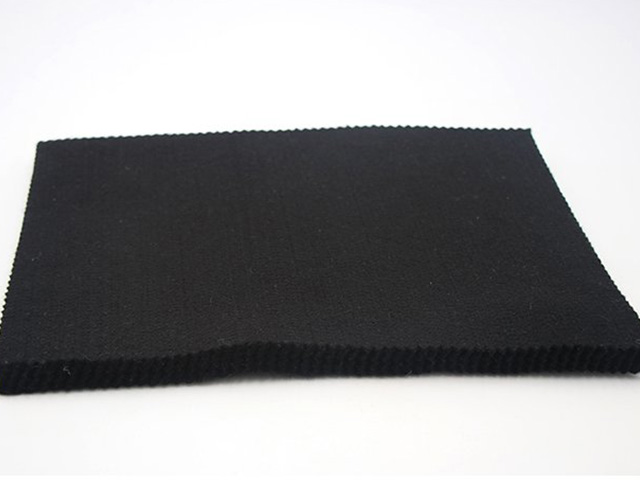
Rayon Graphite Felt
Operating Temperature: ≥2200°C (vacuum), ≥2800°C (inert gas)
Dimensions: Customizable length and width; thickness ranges from 1.5 to 12.5 mm
Types: Rigid felt, soft felt
Delivery Time: 1–3 weeks
- More flexible material with low skin irritation
- Superior thermal insulation performance
What is Rayon Graphite Felt? Rayon graphite felt is made from viscose rayon as the raw material. It is a high-performance thermal insulation material with excellent properties such as light weight, softness, high carbon content, high-temperature resistance, non-volatility, and erosion resistance. Rayon graphite felt is specially designed for high-temperature insulation applications in vacuum furnaces, inert gas furnaces, and other environments. It is mainly used as an erosion-resistant material, insulation for ultra-high-temperature vacuum metallurgical equipment, and other composite materials, and can also be applied in high-performance far-infrared heating elements.
AGRM is a professional manufacturer of graphite electrodes and graphite products, capable of producing a wide range of customizable graphite felt and carbon felt products. We offer free sample testing. If you are interested in applications of graphite felt, please contact us directly for a customized quote.
Types of Rayon Graphite Felt
Rayon-Based Soft Felt
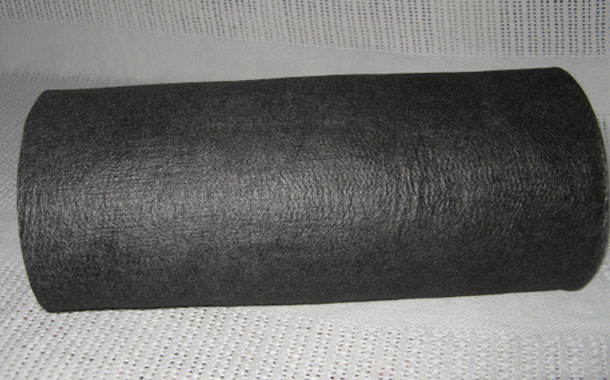
Rayon-based soft graphite felt is made from viscose fibers. It features a soft texture, making it easy to cut, shape, and install. It can be easily cut with knives or scissors and can adapt well to the shapes required for high-temperature insulation in vacuum furnaces and inert gas furnaces. It is especially suitable for complex structures or curved surfaces that require high-temperature insulation.
Rayon-Based Rigid Felt

Rayon-based rigid graphite felt is produced by further graphitizing the soft felt, resulting in a denser material. The surface can be treated with various finishes, including single-sided or double-sided carbon-fluorine compound (CFC) coatings, and single-sided or double-sided graphite foil. Custom surface treatments can be provided according to specific customer requirements.
Features of AGRM Rayon Graphite Felt
Easy to Cut and Install: Soft and easy to process, suitable for complex structures and customized dimensions.
Low Density and Low Thermal Mass: Lightweight with low thermal inertia, helping to improve system response speed.
High Thermal Resistance: Excellent insulation performance, ideal for high-temperature thermal insulation environments.
High Oxidation Resistance: Strong resistance to oxidation, extending service life.
Low Ash and Low Sulfur Content: Minimal impurities, meeting high-purity application requirements and reducing contamination risks.
No Outgassing: Does not release volatile components, suitable for clean process environments.
Excellent High-Temperature Performance: Can operate stably at extremely high temperatures for long periods without deformation or decomposition.
Good Electrical Conductivity: Possesses certain electrical conductivity, applicable in specific electric heating or electrostatic shielding scenarios.
Chemical Inertness: Stable against various chemical media, offering strong adaptability.
Comparison between PAN Graphite Felt and Rayon Graphite Felt
| Item | Rayon Graphite Felt | PAN Graphite Felt |
|---|---|---|
| Raw Material Source | Based on natural cellulose fiber, processed through high-temperature carbonization/graphitization | Based on polyacrylonitrile fiber, produced through heat treatment |
| Fiber Structure | Fine and dense fibers, good flexibility, easy to shape and fit complex structures | Coarser fibers, stable structure, excellent support |
| Thermal Conductivity | Relatively low, suitable for outer layer applications with higher insulation performance requirements | Moderate thermal conductivity, suitable for insulation designs across a wide temperature range |
| Installation Experience | Softer surface, less irritation during handling | Possible slight fiber contact during installation; protective gear recommended |
| High-Temperature Performance | In inert gas environments, can withstand temperatures up to 2800°C with stable performance; suitable for ultra-high temperature conditions | Processing temperature can be customized to 1100°C, 1800°C, 2200°C, or 2600°C; stable and reliable performance, widely used in mainstream heat treatment applications |
| Oxidation Resistance | Meets the needs of most applications | Excellent performance, more durable in oxidative environments |
| Cost | Relatively higher, suitable for applications with higher performance requirements | More cost-effective, suitable for solutions focused on cost-performance balance |
Manufacturing Process of Rayon Graphite Felt
- 1. Raw Material Preparation
Natural plant cellulose is selected as the raw material source, such as wood pulp or cotton linters. The cellulose is dissolved in an alkaline solution, and carbon disulfide (CS₂) is added to convert it into a viscose solution. Then, the viscose solution is extruded through spinnerets and solidified in a coagulation bath to form filament fibers, producing the rayon precursor fibers.
- 2. Heat Treatment Process
The heat treatment mainly consists of three stages: oxidation (stabilization), carbonization, and graphitization.
Oxidation: The rayon precursor fibers are heated in air at around 200–400°C to remove oxygen, hydrogen, and other impurities, stabilizing the fiber structure initially.
Carbonization: The temperature is raised to 1000–2000°C under an inert atmosphere to further remove non-carbon elements, forming carbon fibers.
Graphitization: The temperature is increased above 2500°C to realign carbon atoms into an ordered graphite crystal structure, significantly enhancing thermal conductivity and electrical conductivity.
- 3. Structure Formation and Processing
Felt Preparation: The graphite fibers are dispersed and laid into a web, then processed into soft graphite felt through needle punching or other methods.
Molding and Heat Treatment: Graphite fibers or particles are thoroughly mixed with binders or plasticizers, shaped by molding or extrusion, and then sintered at high temperature to strengthen the material’s structure.
Surface Treatment (Optional): Depending on performance requirements, surface treatments can be applied, such as graphite coatings, fluorocarbon fabrics, or processing into graphite foil to improve wettability, corrosion resistance, or other specific properties.
Recommended Applications of Rayon Felt
1. Thermal Management and High-Temperature Industrial Applications
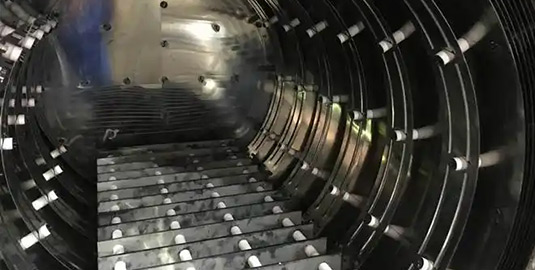
Furnace insulation materials and components: Used as linings or insulating layers in high-temperature furnaces to provide effective thermal shielding.
Thermal shields and heat dissipators: Efficiently control heat flow and prevent energy loss.
Brazing and welding backing strips: Provide thermal buffering during welding to prevent overheating and deformation.
Thermal insulators: Widely applied in industrial and automotive thermal protection systems.
2. Electrochemical and Energy Applications
Redox flow battery cathodes: Serve as electrode materials to improve reaction efficiency and conductivity.
Biofuel cells and microbial fuel cells provide stable electron transfer pathways that are suitable for various bioelectrochemical reactions.
Reaction surfaces or catalyst supports in other electrochemical processes: The Graphite structure acts as a stable conductive framework to support catalyst distribution and enhance reaction efficiency.
3. Other Applications
Glass blowing pads, plumber’s pads, and furnace wicks: High temperature and wear resistance, suitable for repeated use.
Wicks and gaskets in ultra-light furnaces: Maintain structural stability and provide thermal conduction paths, ideal for precision manufacturing environments.


