

Rigid Graphite Felt
Operating Temperature: approximately above 2250°C.
Size: thickness is 20-600mm, custom sizes are available, and standard sizes are in stock.
Types: asphalt-based rigid graphite felt, PAN-based rigid graphite felt, rayon-based rigid graphite felt.
Surface Coating: graphite foil, CFC fabric, graphite coating (to improve oxidation resistance, extending service life by more than 30%), asphalt coating, exposed (single-sided or double-sided coating).
- Perfect insulation material for industrial furnaces.
- Ideal for intermittent vacuum furnace operations, saving significant energy.
What is a Rigid Graphite Felt? Rigid graphite felt is a high-temperature insulating material suitable for non-oxidizing environments, made by graphitizing soft graphite felt and adding a small amount of binder to form any shape (e.g., barrel-shaped, disc-shaped, rectangular). It has a wide range of thicknesses and sizes. Rigid felt is generally denser than soft felt, and its surface can be treated with various forms such as graphite foil, CFC fabric, graphite coating, or other coatings. Additionally, based on the carbon fiber material, rigid felt can be categorized into asphalt-based, PAN-based, and viscose-based types. Rigid graphite effectively improves the working environment and operability, and different surface coatings can be applied according to specific requirements to meet various application needs. Compared to soft felt, it significantly reduces smoke generation, thus extending its service life.
AGRM offers stable and reliable rigid graphite felt and soft graphite felt. The graphite products we produce are highly competitively priced, including PAN graphite felt and rayon graphite felt, which can be customized according to customer specifications.
- Manufacturing Process of Rigid Graphite Felt
Rigid graphite felt is made using a special process that combines graphite paper, PAN-based graphite felt, curing and shaping, and secondary high-temperature treatment. It has high purity, high carbon content, excellent ablation resistance, thermal shock resistance, resistance to gas flow erosion, and outstanding insulation and heat retention properties. It is primarily used in ultra-high-temperature vacuum high-pressure sintering furnaces and the electronics, semiconductor, and solar photovoltaic (polycrystalline casting furnaces, single-crystal furnaces) industries and in vacuum industrial furnace equipment.
- Difference Between PAN and Rayon Graphite Felt
PAN (polyacrylonitrile) and rayon are two different base carbon fiber materials. PAN-based graphite and carbon felts are cheaper, have a longer service life, and are more commonly used as furnace insulation layers. Rayon-based graphite felt has lower thermal conductivity, and does not cause itching for workers during installation, but is more expensive and has lower oxidation resistance compared to PAN. As a result, some customers choose to use PAN for the inner part of the furnace insulation layer to reduce costs and extend service life, and rayon for the outer part to achieve better insulation performance and reduce power consumption.
Surface Treatment of Rigid Graphite Felt
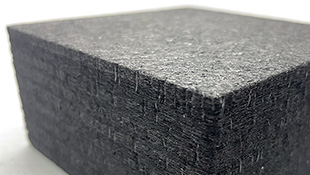
Uncoated

Graphite Coating

CFC Fabric Coating
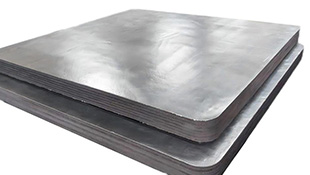
Graphite Foil Coating
Types of Rigid Graphite Felt
PAN-based Rigid Graphite Felt
Made from high-quality PAN-based carbon felt that is graphitized, it is it is used for protective atmospheres and insulation in vacuum furnaces. It features high-temperature resistance, corrosion resistance, and low thermal conductivity. The surface and edges are sealed to reduce porosity and enhance oxidation resistance. Internal layering improves radiation insulation and reduces furnace contamination. It is commonly used as insulation in single-crystal furnaces, carburizing furnaces, quartz furnaces, vacuum furnaces, induction furnaces, high-frequency furnaces, reaction calorimeters, heat treatment furnaces, sintering furnaces, welding furnaces, and other industrial furnaces. It can also be used as a corrosion-resistant filtration material.
Rayon-based Rigid Graphite Felt
Used for protective atmospheres and insulation in vacuum furnaces. It can be easily cut or machine-customized to the required size, suitable for both square and round heating zones. The surface and edges are sealed to reduce porosity and increase oxidation resistance. A foil can be added to the graphite felt surface, which can be layered internally to improve radiation heat retention and reduce furnace contamination. It is widely used in vacuum furnaces, powder metallurgy sintering, sputtering targets, CVD, CVI, and CVR furnaces, carbon fiber heat treatment furnaces, silicon/GaAs crystal growth furnaces, annealing and hot pressing, and fiber optic production.
Asphalt-based Rigid Graphite Felt
Made from asphalt-based carbon fiber felt, hardened into a composite material with certain rigidity and self-supporting properties. It has a low density, no shedding of short fibers, and excellent thermal insulation efficiency. It is widely used as an insulation material in various high-temperature vacuum furnaces such as vacuum heat treatment furnaces, sintering furnaces, melting furnaces, and recrystallization furnaces. It offers a long service life and is easy to install and dismantle.
Highlights of AGRM Rigid Graphite Felt
AGRM rigid graphite felt is made from high-purity rayon and carbonized PAN fibers, mixed with proprietary resins, and vacuum-formed into insulation boards, blocks, cylinders, and other components. The material undergoes carbonization and graphitization, making it suitable for high-temperature furnace applications up to 2,200°C.
Low Thermal Conductivity: Effectively insulates and reduces heat transfer.
High Thermal Stability: Withstands temperatures up to approximately 3,000°C in protective or vacuum atmospheres.
Easy to Process: Can be cut with scissors or blades, suitable for applications with small bending radii.
High Purity: Features excellent characteristics such as low sulfur and low ash content.
No Static Charge: Prevents static buildup, ensuring safe use.
High Electrical Resistivity: Coupling only occurs in induction fields above 12kHz.
High Temperature and Corrosion Resistance: Withstands extreme temperatures and chemical environments.
Good Air Erosion Resistance: Effectively resists air erosion.
Long Service Life: Offers an extended lifespan.
Easy to Cut, Assemble, and Shape: Convenient for processing into various shapes.
Excellent Surface Performance: Unaffected by molten metals.
Low-Specific Heat: Enables faster heating and cooling of the furnace body.
Specifications
| Model | Heat Treatment Temperature | Carbon Content | Density (g/cc) | Ash (ppm) | Surface Treatment | Shape |
| Rayon-Based Rigid Graphite Felt | 2200 °C | ≥ 99% | 0.12–0.25 | ≤ 200 | Graphite foil coated; CFC (Carbon Cloth) coated; Anti-oxidation painting | Graphite rigid board: Thickness 20–600 mm; Graphite Cylinder: Diameter: up to 1500–1800 mm |
| PAN-Based Rigid Graphite Felt | 2200 °C | ≥ 99% | 0.16–0.32 | ≤ 200 |
Why AGRM?
- Stable Performance
- Durable and Effective
- Easy Installation
- Smooth Operation
- Wide Application
- Fast Delivery
AGRM is a professional graphite electrode and graphite product manufacturer in China, offering graphite felt and technical support. High temperature, high purity, low ash content, no emissions, excellent oxidation resistance, and long service life. AGRM is committed to the production and innovation of graphite felt, boards, and shapes. Contact us, and we look forward to establishing a long-term cooperative relationship with you.
Applications
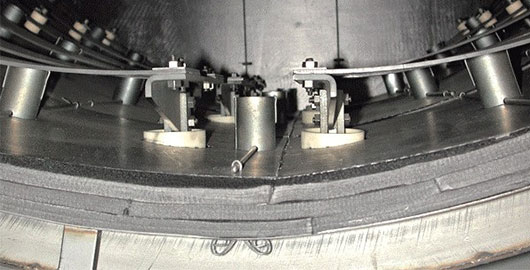
- Vacuum Furnace Insulation
- Inert Gas Furnace Insulation
- Polycrystalline and Single-Crystal Silicon Furnace Insulation
Rigid Felts vs. Soft Felts
Rigid Graphite Felt

- Appearance
Rigid, not easily bent. The surface is relatively compact and dense, typically dark gray or black, with the typical luster of graphite material.
- Properties
Rigid graphite felt has higher density and rigidity, making it resistant to deformation under pressure and ideal for heavy load-bearing environments.
- Applications
Commonly used in applications requiring high-temperature insulation, pressure resistance, and strength, such as high-temperature furnaces and gasification furnaces.
Soft Graphite Felt

- Appearance
Soft, flexible, and deformable. The surface appears loose and fluffy with large air pores and relatively low density. Typically dark gray or black as well.
- Properties
Soft graphite felt is highly flexible and can easily bend or deform, making it suitable for applications requiring elasticity or deformability.
- Applications
Ideal for thermal insulation, insulation, and filtration in environments that require flexibility and excellent thermal isolation.


