
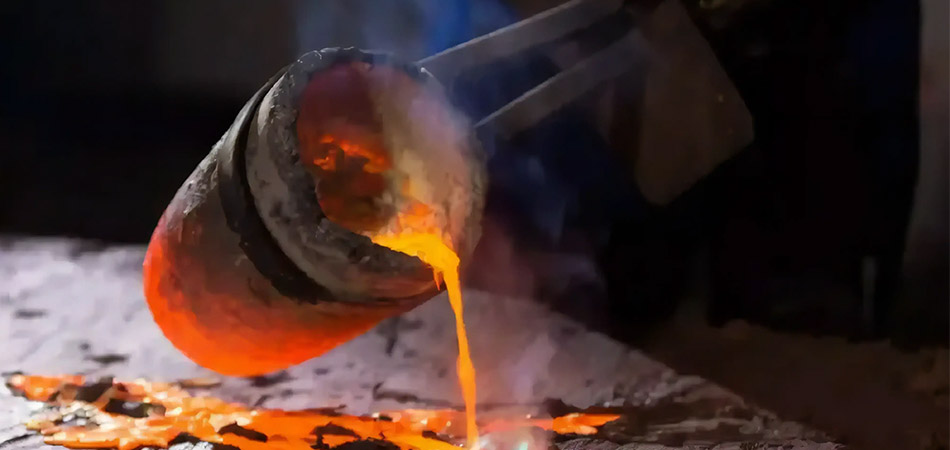
Graphite crucibles, due to their excellent high-temperature resistance and thermal conductivity, have become indispensable tools in metal smelting. While ordinary crucibles typically withstand temperatures up to around 1600 °C, graphite crucibles made of high-purity graphite can operate stably at temperatures above 2000 °C. They are particularly suitable for the smelting of nonferrous metals such as copper, aluminum, and their alloys.
In the smelting of non-precious metals like copper and aluminum, graphite crucibles demonstrate outstanding applicability. Their efficient thermal conductivity not only allows metals to heat up rapidly but also ensures uniform temperature distribution, thereby improving overall smelting efficiency. At the same time, graphite crucibles effectively prevent molten metal from coming into direct contact with the furnace wall, avoiding chemical reactions that could introduce impurities. This significantly enhances the purity of the molten metal and the quality of the final product.
AGRM is a professional graphite products supplier integrating both manufacturing and sales. We offer a wide range of graphite crucibles in various types and shapes, with customization available to meet the specific requirements of different smelting processes. In addition, we provide tailor-made graphite electrodes for the steelmaking industry, ensuring high performance and reliability. If you have any graphite product needs, feel free to contact us for professional consultation and solutions.
Types of Graphite Crucibles
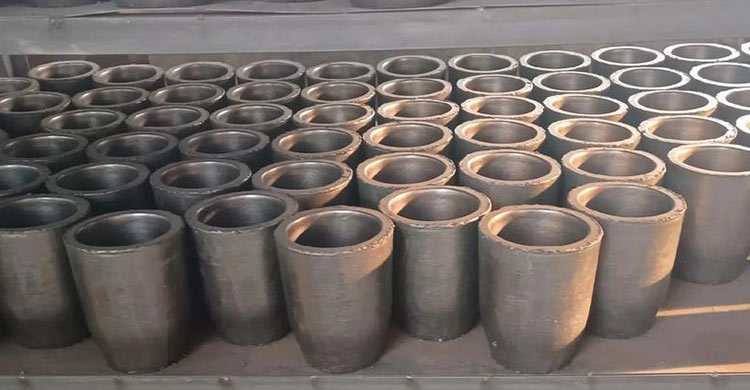
1. High-Purity Graphite Crucible
- Material Characteristics: Made from high-purity graphite with minimal or no impurities.
- Performance Advantages: Excellent electrical and thermal conductivity, ensuring rapid heating and uniform heat distribution.
- Applications: Ideal for processes requiring high purity and contamination-free conditions, such as smelting precious metals (gold, silver) and special alloys.
2. Clay Graphite Crucible
- Material Characteristics: Produced from natural graphite mixed with clay and sintered at high temperatures, resulting in a robust structure.
- Performance Advantages: Cost-effective with good resistance to thermal shock.
- Applications: Suitable for melting copper, aluminum, and other less reactive nonferrous metals; also used for certain cast iron, cast steel, and precious metal smelting.
3. Silicon Carbide Graphite Crucible
- Material Characteristics: Manufactured from natural graphite combined with silicon carbide.
- Performance Advantages: The silicon carbide crucible has outstanding high-temperature resistance, long service life, and excellent resistance to erosion.
- Applications: Widely used for melting iron, steel, copper alloys, and aluminum alloys, especially under high-temperature or harsh operating conditions.
Silicon Carbide Crucibles vs. Graphite Crucibles
| Dimension | Silicon Carbide Crucible | High-Purity Graphite Crucible |
|---|---|---|
| Temperature Range | Applicable range about 1600°C–1800°C; good thermal shock resistance and structural stability | Applicable range up to above 2000°C; remains stable at high temperatures with low thermal expansion |
| Chemical Compatibility | Stable in acidic and alkaline environments; maintains good resistance in high-temperature air | Stable in inert and reducing environments; application range can be extended with protective measures |
| Material Composition | Composed of silicon and carbon, offering excellent thermal conductivity and hardness; performance can be enhanced with fillers or binders (e.g., silicon nitride) | Composed of high-purity carbon, providing high-temperature stability and strength; binders (e.g., clay) can be added to optimize overall performance |
| Oxidation Resistance | Forms a silicon dioxide protective layer in high-temperature air, helping to preserve material properties | Remains stable under suitable environments and protective measures, ideal for controlled high-temperature applications |
Shapes of Graphite Crucibles
1. Standard Type
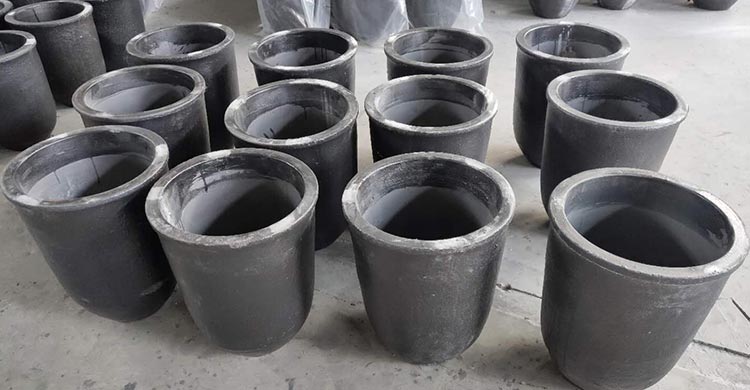
- Proportion: Outer Diameter : Height ≈ 0.7–0.8 : 1
- Size Range: Outer diameter 72–720 mm, height 82–800 mm (customizable)
- Features: Conventional structure, suitable for most metal smelting applications.
2. Special Shapes
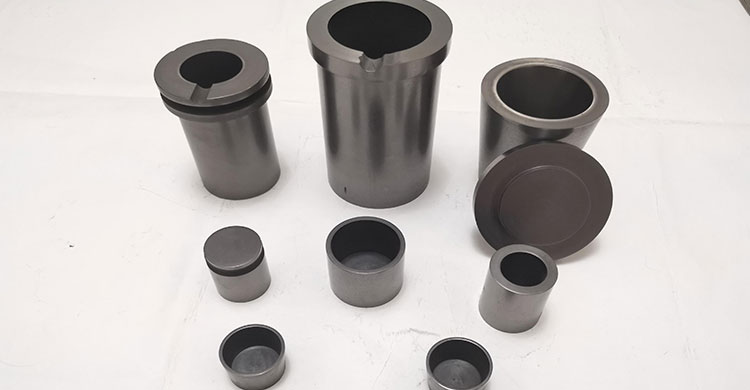
Long Type
- Proportion: 0.6–0.7 : 1
- Features: Slender design with relatively larger capacity, ideal for deep-chamber heating scenarios.
Bowl Type
- Proportion: 1 : 1
- Features: Wide opening for easy access, suitable for processes requiring frequent operation or large-area heating.
Spouted Type
- Features: Designed with a pouring spout, convenient for discharging molten metal, widely used in casting operations.
Electric Furnace Type
- Proportion: Approx. 0.6 : 1
- Features: Cylindrical and elongated, tailored for electric furnace smelting, suitable for narrow furnace chambers or deep melting processes.
Uses of Graphite Crucibles in Melting Aluminum
1. Casting Industry
In aluminum casting production, graphite crucibles are mainly used to hold molten aluminum and pour it into molds. Common cast parts include engine blocks, cylinder heads, and automobile wheels. The crucible ensures the purity of the melt and the quality of the final castings. In sand casting, molten aluminum is precisely poured into a sand mold cavity and solidified to produce high-precision aluminum components, widely applied in structural manufacturing.
2. Aluminum Smelting Industry
During primary aluminum refining, crucibles serve as stable high-temperature containers, helping to remove impurities and improve purity. They are also widely used in alloy smelting, where aluminum is combined with other elements to produce hard aluminum and superhard aluminum materials. These alloys are extensively applied in aerospace, automotive, and transportation industries.
3. Research and Experimentation
In new material development, crucibles are used for small-batch experiments under varying temperatures and atmospheres to explore novel aluminum materials. They are also employed in performance testing by preparing standard samples, allowing researchers to analyze and validate material properties.
4. Recycled Aluminum Recovery
Graphite crucibles are utilized in melting scrap aluminum and separating impurities to ensure high-quality recycled aluminum. Their excellent corrosion resistance is especially valuable in processing complex scrap compositions, as it not only prevents melt contamination but also extends equipment service life.
Precautions for Using Graphite Crucibles
1. Moisture Protection and Preheating
After use, graphite crucibles should be stored in a dry environment; exposure to rain or moisture must be avoided. Before first use, crucibles should be gradually preheated to around 500°C. Graphite is prone to moisture absorption, which can soften the crucible and make it susceptible to deformation under impact. Moisture inside the crucible can also dilute or contaminate the metal, or trigger unwanted chemical reactions, affecting material quality. Strict moisture- and water-proofing measures must be followed.
2. Charging and Pouring
When adding material, do not overfill the crucible; leave room for thermal expansion to prevent cracking. When pouring molten metal, it is recommended to use a ladle rather than tongs. If tongs are necessary, ensure their shape matches the crucible to avoid localized stress that could reduce the crucible’s lifespan.
3. Handling
Although graphite crucibles are strong, repeated high drops or impacts can cause cracks over time. Cracks are irreversible and require crucible replacement. Handle crucibles gently to prevent mechanical damage. Avoid exposing the surface to direct oxidizing flames, as this accelerates wear and shortens service life. Proper handling is crucial for longevity.
4. Heating
Do not heat graphite crucibles directly over an open flame; the limited thermal conductivity offers little benefit and may leave black scorch marks on the surface. High-purity graphite crucibles have excellent thermal conductivity and high-temperature resistance, with a low thermal expansion coefficient that allows some tolerance to rapid heating and cooling. They are also chemically stable and resistant to acidic or alkaline solvents.