
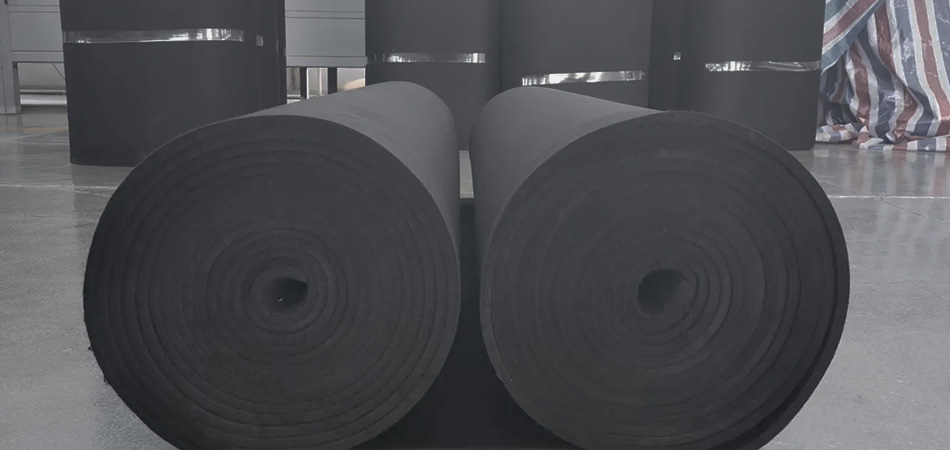
Carbon felt is a flexible material made from carbon fibers, featuring excellent electrical conductivity, thermal conductivity, and high-temperature resistance. It is known for being lightweight, soft, and durable, and is commonly used as an insulation layer in high-temperature furnaces, as an electrode material in electrolytic cells and fuel cells, and in vacuum heat treatment equipment. It is flexible, easy to cut, and convenient to install, making it adaptable to complex structural designs. Carbon felt is widely used in metallurgy, batteries, vacuum furnaces, fuel cells, and chemical industries.
The raw material of carbon felt is usually organic fiber (such as viscose fiber or polyacrylonitrile fiber). After high-temperature carbonization, it becomes carbon fiber, which is then pressed into a felt structure through a special process. This material not only retains the flexibility of the fiber but also has the high strength and chemical stability of carbon materials.
Features:
- Carbon fiber felt is a soft and elastic material made of carbon fibers.
- It is designed to provide excellent high-temperature insulation performance and withstand extreme thermal conditions.
Temperature Resistance:
According to different heat treatment temperatures, carbon felt can be divided into two types: carbon felt and graphite felt.
- The carbonization temperature of carbon felt is about 1000°C, with a carbon content of about 90%, and it can be used for a long time below 1000°C.
- Graphite felt is graphitized at a high temperature above 2000°C, with a carbon content of more than 99%. Its maximum operating temperature can reach 2800°C, and it performs better under vacuum or inert gas environments.
AGRM focuses on the research and manufacture of graphite and carbon-based materials, including graphite electrodes, graphite crucibles, carbon felt, graphite felt, and more. We can provide customized carbon felt solutions with different densities, thicknesses, and purities according to customer requirements. With reliable quality and reasonable prices, AGRM provides customers with durable and efficient carbon felt solutions.
Classification of Carbon Felt
1. Based on Raw Materials and Manufacturing Process


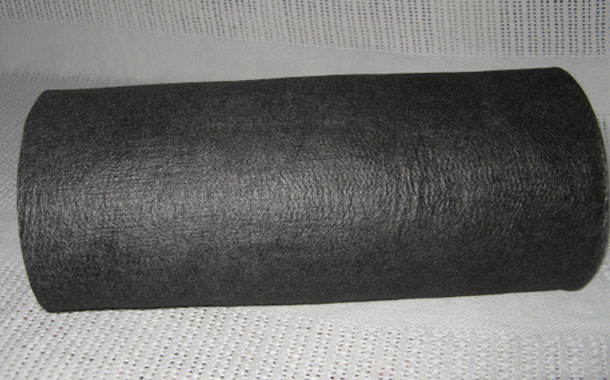
From the perspective of raw materials and preparation methods, carbon felt is mainly divided into three types: polyacrylonitrile (PAN)-based carbon felt, pitch-based carbon felt, and viscose-based carbon felt.
PAN-based Carbon Felt: This is the most common and widely used type. It is made from polyacrylonitrile fibers through pre-oxidation and carbonization, offering excellent strength, heat resistance, and dimensional stability. It is suitable for high-temperature vacuum furnaces, thermal insulation layers, and other applications.
Pitch-based Carbon Felt: Made from petroleum pitch or coal tar pitch through spinning, carbonization, and other processes, it has outstanding electrical and thermal conductivity. It is often used in electrodes, electrochemical energy storage devices, and high-temperature heating environments.
Viscose-based Carbon Felt (Rayon-based): Produced by carbonizing viscose fibers, it is soft, lightweight, and has low thermal conductivity. It is suitable for applications requiring flexibility and insulation, such as furnace walls or insulation layers in precision equipment.
2. Based on Product Form


According to product form, carbon felt can be categorized into soft carbon felt, rigid carbon felt, and graphite felt (carbon felt subjected to high-temperature graphitization).
Soft Carbon Felt (or Soft Graphite Felt): Made from chopped carbon fibers as non-woven fabric, it is flexible, can be rolled or cut, and is easy to install and process. Graphitized soft graphite felt has a higher carbon content and more stable performance, widely used in high-temperature vacuum equipment and solar crystal growth furnaces.
Rigid Carbon Felt (or Rigid Graphite Felt): Based on soft felt, resin or carbon cloth is added, then laminated, cured, and carbonized. It has a sturdy structure and high compressive strength, mainly used for structural support or fixing insulation systems inside high-temperature furnaces.
Characteristics of Carbon Felt


Thermal Insulation
Carbon felt has an extremely low thermal conductivity, effectively reducing heat transfer and energy loss. It is an ideal insulation material for high-temperature furnaces, vacuum equipment, and similar applications. Even in vacuum or inert atmospheres above 2000℃, it maintains stable thermal performance.
High-Temperature Resistance
Carbon felt can operate long-term at 1650℃–2000℃ in vacuum or inert gas environments. Some graphitized carbon felts can withstand temperatures up to 3000℃. Its structure remains stable without melting or deforming, making it highly suitable for high-temperature metallurgy, single crystal growth, and heat treatment equipment.
Chemical Stability
Carbon felt exhibits excellent resistance to most acids, alkalis, and organic solvents, and is not easily corroded or degraded. Outside oxidative environments, it maintains chemical inertness over extended periods, making it suitable for chemical reaction vessels, filtration media, and catalyst supports.
Lightweight and Flexible
Carbon felt is low in density and lightweight, easy to cut, roll, and shape, allowing flexible adaptation to complex or non-standard structures. Its soft fiber structure simplifies installation, making it ideal for custom insulation or electrode systems.
Electrical and Thermal Conductivity
The internal carbon fiber structure gives carbon felt graphite-like electrical conductivity. Highly pure graphitized carbon felt demonstrates excellent conductivity, often used as electrode material in batteries, fuel cells, and electrolysis systems. Its uniform thermal conductivity also effectively disperses heat in high-temperature environments, preventing localized overheating.
Processability and Stability
Carbon felt maintains flexibility while remaining structurally stable under high temperatures or electrochemical conditions, resisting cracking or pulverization. Its thickness, density, and purity can be tailored to meet the performance requirements of various applications.
Differences Between Carbon Felt and Graphite Felt
| Item | Carbon Felt | Graphite Felt |
| Basic Definition | Felt-like material made from carbon fibers, with high adsorption and porous structure. | Graphitized material obtained by high-temperature graphitization (>2000℃) of carbon felt. |
| Main Composition | Carbon fibers or other organic fibers, carbonized to ~90% carbon content. | Graphitized carbon fibers or graphite particles, carbon content >99%. |
| Preparation Process | Organic fibers → Carbonization (~1000℃). | Carbon felt → High-temperature graphitization (2000–2800℃). |
| Microstructure | Mainly amorphous carbon, with disordered carbon atom arrangement. | Ordered graphite lattice structure, carbon atoms arranged in layers. |
| Electrical Conductivity | Good conductivity. | Excellent conductivity (higher than carbon felt). |
| Thermal Conductivity | Certain thermal conductivity. | Superior thermal conductivity, high heat transfer efficiency. |
| High-Temperature Resistance | Long-term use up to ~1000℃. | Can withstand up to 2800℃ in oxygen-free environments. |
| Density & Weight | Lower density, lightweight. | Slightly higher density than carbon felt, still lightweight. |
| Chemical Stability | Corrosion-resistant, good oxidation resistance. | Stronger acid and alkali resistance, higher chemical stability. |
| Mechanical Properties | Soft, elastic, can be cut or sewn. | Also soft, but with better shape stability and elasticity. |
| Typical Features | Lightweight, high specific strength, strong adsorption, corrosion-resistant. | High purity, high thermal & electrical conductivity, high-temperature resistance, non-melting. |
| Main Applications | – Chemical corrosion protection – Electrochemical electrodes – Vacuum furnace insulation – Adsorption & purification – Aerospace & structural reinforcement | – Single-crystal silicon furnace insulation – High-temperature furnace thermal field materials – High-purity chemical filtration – Electrolytic cell heat conduction and insulation |
| Property | PAN Carbon Fiber Felt | PAN Graphite Fiber Felt |
| Thermal Conductivity, W/m·K | 0.12–0.17 | 0.10–0.15 |
| Carbon Content, % | ≥90 | ≥99.00 |
| Ash Content, ppm | 1000–2000 | ≤800 |
| Bulk Density, g/cm³ | 0.11–0.16 | 0.10–0.15 |
| Width, mm | ≤1200 | ≤1200 |
| Thickness, mm | 10 / 8 / 6 | 10 / 8 / 6 |
| Production Temperature, ℃ | 1000 | 2000 |
Five Major Applications of Carbon Felt
1. Thermal Insulation
Carbon felt is widely used for insulation. It provides effective thermal resistance, helping to maintain high temperatures inside furnaces and kilns. Its structure traps a large amount of air, making it an efficient insulating layer that minimizes heat loss. The fiber structure and graphite properties also contribute to both thermal insulation and electrical insulation.
2. Battery Electrode Material
Carbon felt is commonly used to make battery electrodes. Its graphite characteristics provide excellent electrical conductivity, making it highly effective in redox flow batteries and fuel cells. It can store electrical energy and facilitate its conduction. The fibrous composition of carbon felt allows it to integrate easily into battery designs, making it a reliable and efficient electrode material.
3. Vacuum Furnaces
Solid carbon felt is used as an insulating material in vacuum furnaces. It can withstand the high temperatures generated within these furnaces. Its flexibility and softness allow installation in confined furnace spaces. With stable thermal resistance, it maintains performance even under harsh conditions. The graphite component ensures consistent properties over time.
4. Catalyst Support
Carbon felt can serve as a catalyst support material. It holds the catalyst in place during chemical reactions, providing a stable substrate. This allows gases to flow efficiently and heat to be well-managed. Its chemical stability makes it suitable for many reactions. The fiber and graphite characteristics make it ideal for chemical processing applications that require stability and high efficiency.
5. Filtration
Carbon felt is also used in various filtration processes. It can efficiently separate liquids and gases. The fibrous structure provides high filtration efficiency, making it applicable in a wide range of environments, from aggressive chemical processes to general filtration needs. Its toughness and chemical resistance make it an excellent choice for virtually any filtration system.