

In laboratories, metalworking shops, and small to mid-sized foundries, graphite crucibles are the preferred choice for metal melting. Their popularity is no coincidence—combining extreme heat resistance, excellent thermal conductivity, and superior chemical stability, they are ideal for melting a wide range of metals, from gold and silver to titanium and rare-earth alloys.
Unlike traditional refractory linings or induction melting systems, graphite crucibles offer unmatched flexibility for small-batch, multi-metal operations. Whether you’re melting copper one day and aluminum the next, graphite crucibles ensure clean transitions, minimizing contamination and reducing downtime.
Graphite Crucibles: The Ideal Choice for Multi-Metal Melting
“Effortlessly Handles” – 7 Common Metals
- Gold (1064 °C) and Silver (961 °C): Graphite crucibles are the top choice for precious metal refining due to their inertness and high purity. A jewelry manufacturer reported reducing gold loss from 0.1% to 0.02% after switching to high-purity graphite crucibles.
- Copper and Copper Alloys (1083 °C): While molten copper can erode ceramic containers, graphite’s high density (≥1.85 g/cm³) ensures fast heat transfer and strong corrosion resistance.
- Aluminum and Aluminum Alloys (660 °C): Graphite is non-wettable to aluminum, minimizing residue. With oxidation-resistant fluxes, melt cleanliness improves and crucible life is extended.
- Lead, Tin, Zinc (327 °C – 419 °C): These low-melting-point metals can be safely melted in medium-density graphite crucibles with minimal degradation.
“Melt with Care” – 4 Specialized Metals
- Magnesium and Alloys (650 °C): Must be melted under an inert gas (argon) to avoid violent reactions with oxygen or moisture.
- Nickel (1455 °C) and Cobalt (1495 °C): Require high-purity, high-density crucibles. Graphite remains stable and non-reactive, preserving alloy composition at elevated temperatures.
- Platinum Group Alloys (1700 °C+): Platinum, rhodium, and palladium are typically melted in isostatically pressed graphite crucibles to prevent metal loss and withstand extreme heat.
For Ultra – Reactive Metals
- Titanium (1668 °C) and Zirconium (1852 °C): Need internal Y₂O₃ (yttrium oxide) coatings on crucibles to prevent carbide formation. Suitable for small-scale experimental melts in laboratory settings.
- Rare Earth Metals (e.g., Neodymium, Dysprosium): These metals react aggressively with graphite. Specialized LaF₃-coated crucibles or non-contact melting methods like levitation melting are required.
AGRM Graphite Crucibles for Metal Melting
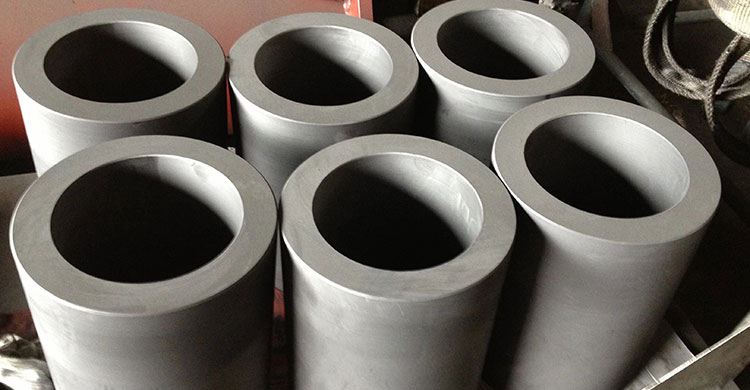
At AGRM, we design and manufacture graphite crucibles engineered for optimal performance across a wide range of melting applications. Here’s what sets our crucibles apart:
Materials & Formulation
- Graphite + Silicon Carbide Composite: Combines excellent corrosion resistance with enhanced thermal conductivity and structural strength.
- Purity: Made with 85–93% flake graphite to ensure clean melts and minimal impurity introduction.
- Forming Methods: Available in molded, extruded, and isostatically pressed variants to meet diverse thermal and mechanical requirements.
Thermal Performance
- Operating Range: Up to 1600 °C continuous use; short-term tolerance exceeds 2000 °C.
- Thermal Shock Resistance: Withstands over 5 rapid cooling cycles from 1000 °C to room temperature without cracking.
Chemical Stability
- Acid and Alkali Resistance: Graphite matrix resists corrosion from molten metals, fluxes, and atmospheric gases.
- Non-reactive Surface: Maintains the purity of molten metals—ideal for precious and reactive metals.
Sizes & Shapes
- Standard Capacity Range: From 250 g to 500 kg.
- Custom Designs: Options include square, conical, flanged, multi-chamber, and handle-equipped crucibles.
- Precision:Minimum machining tolerance of ±0.1 mm. Optional anti-oxidation coatings available to extend service life in open-air applications.
Crucible Types by Graphite Source
1. Natural Graphite Crucibles
Natural graphite crucibles are primarily composed of natural flake graphite and clay, with added refractory materials to enhance performance. These crucibles are typically categorized as clay-bonded graphite crucibles or carbon-bonded crucibles. One representative type, the clay-bonded crucible, is formed solely through the sintering strength of clay, offering excellent mechanical strength and thermal shock resistance. These crucibles are widely used for melting ferrous and non-ferrous metals, including steel, copper, and copper alloys. Available in a wide capacity range—from 250g to 500kg—they can be supplied with accessories such as slag skimmers and furnace lids to suit various melting needs. Natural graphite crucibles typically contain around 50% clay minerals, in contrast to synthetic graphite crucibles, which have extremely low impurity content.
2. Synthetic Graphite Crucibles
Synthetic (or artificial) graphite crucibles are preferred for melting small quantities of precious metals, high-purity metals, and high-melting-point metals and oxides. Due to their ultra-low impurity content and excellent chemical stability, these crucibles are commonly used in specialized applications, such as gas analysis in steel. Technically, they are well-suited for the refining of high-purity metals and are often made from purified synthetic graphite.
Why Choose AGRM?
Unmatched Material Quality
- High-Density Formulation: Crucible density ≥ 1.85 g/cm³, ensuring excellent thermal conductivity and extended service life.
- Special Glazing: Applied anti-oxidation coating reduces surface corrosion and extends operational lifespan in oxidizing environments.
- Thermal Strength: Unlike many materials, strength increases with temperature — our crucibles are stronger at 2000°C than at room temperature.
Tailored to Your Needs
- OEM & ODM Support: We accommodate custom manufacturing to meet your specific brand or operational requirements.
- Application-Based Design: Crucibles can be tailored to fit your furnace type, metal composition, and melting volume.
- Optional Internal Coatings: Choose from BN (Boron Nitride), Y₂O₃ (Yttrium Oxide), or LaF₃ (Lanthanum Fluoride) coatings to match metal reactivity and purity demands.
Performance Assurance & Quality Control
- Batch Testing Protocols: Every production batch undergoes spectral purity analysis, Compression strength test (≥ 10 MPa) and Thermal shock resistance (withstands ≥5 heating/cooling cycles)
- Warranty Coverage: Non-human damages within the warranty period are fully replaceable.
- Comprehensive Documentation: Each shipment includes a QC report and a technical data sheet for traceability and compliance.
Expert Technical Support
- Engineering Consultation: Our engineers provide guidance on material compatibility, process optimization, and application-specific advice.
- Sample Testing: Trial crucibles are available to ensure precise matching with your melting conditions and alloy requirements.
A Smart Investment in High-Performance Metal Melting
When you’re looking for the ideal crucible for metal melting—especially in diverse and small-batch operations—AGRM graphite crucibles offer the perfect combination of thermal efficiency, chemical stability, and cost-effectiveness.Whether you’re working with aluminum alloys or high-purity platinum, our crucibles deliver:
- Faster Melting Cycles: Our graphite crucibles feature excellent thermal conductivity, ensuring quicker melt times and higher throughput.
- Extended Service Life: Engineered for thermal shock resistance and corrosion protection, AGRM crucibles offer longer lifespans, minimizing downtime and reducing replacement costs.
- Improved Metal Quality: The non-reactive graphite surface and smooth internal finish prevent metal adhesion and contamination, delivering high-purity molten metal for casting.
- Energy Efficiency: Graphite and silicon carbide’s thermal insulation properties reduce the energy required to maintain molten metal, significantly lowering operating costs in high-volume operations.
Need Custom Crucibles or a Quotation?
AGRM is ready to deliver professional-grade crucibles designed for performance and reliability—whether for foundries or laboratories. You will receive free technical consultation, detailed technical data sheets, tailored crucible quotes, and sample testing programs. Contact us today!